Today I had the pleasure to attend a work party at the Jamestown S’Klallam Tribe’s garden plot in Sequim (“Skwim”), WA.
Non-tribal members were invited to come help put the garden to bed for winter as an act of service replacing conventional Thanksgiving Day festivities, and about 25 white people showed up to weed and mulch.
I pushed a wheelbarrow from the wood chip pile to the garden paths and back for a couple hours, ate some snacks, and met some really nice folks.
The heart of the Jamestown S’Klallam Nation is 15 minutes back down the road in a town called Blyn, which I have driven through many times during this year on the Olympic Peninsula.
It is striking immediately upon entering Blyn that this is a sovereign Native locus with tribal-owned shops, recreational areas, public health services, and government offices. From the library and art gallery to the cannabis dispensary and gas station, there is a continuity of Salish art on every building visible from the highway.
On the Tribe’s website, they describe what led to the formal purchase of 210 acres of land along the Strait of Juan de Fuca in 1874:
“Our history shows that we have always been self-reliant and determined to forge our own path. In 1855, the S’Klallam leaders signed a treaty with the Federal government with the understanding that they would always be able to hunt, fish and gather in their “usual and accustomed” grounds. As increasing numbers of non-Indian settlers began to arrive in the area desiring the same abundant lands and waters that were so important to the S’Klallam people, the S’Klallam people living in the Dungeness area decided that in order to survive, they had to adopt a new value system that included property ownership.”
Indeed, the Tribe rejected every offer made by the US federal government to fund their relocation and held strong without government assistance, developing their own cultural and economic base that is still thriving today.
Yet even when Native people are successfully playing the colonizer’s game (i.e., property ownership), there is a fundamental lack of respect and acknowledgement from the colonizer. It took until 1981, over a century from the initial land purchase, for the federal government to recognize the Jamestown S’Klallam Tribe.
Thinking about this today reminded me of something I learned visiting the grave of Chief Seattle in the town of Suquamish a few weeks ago.
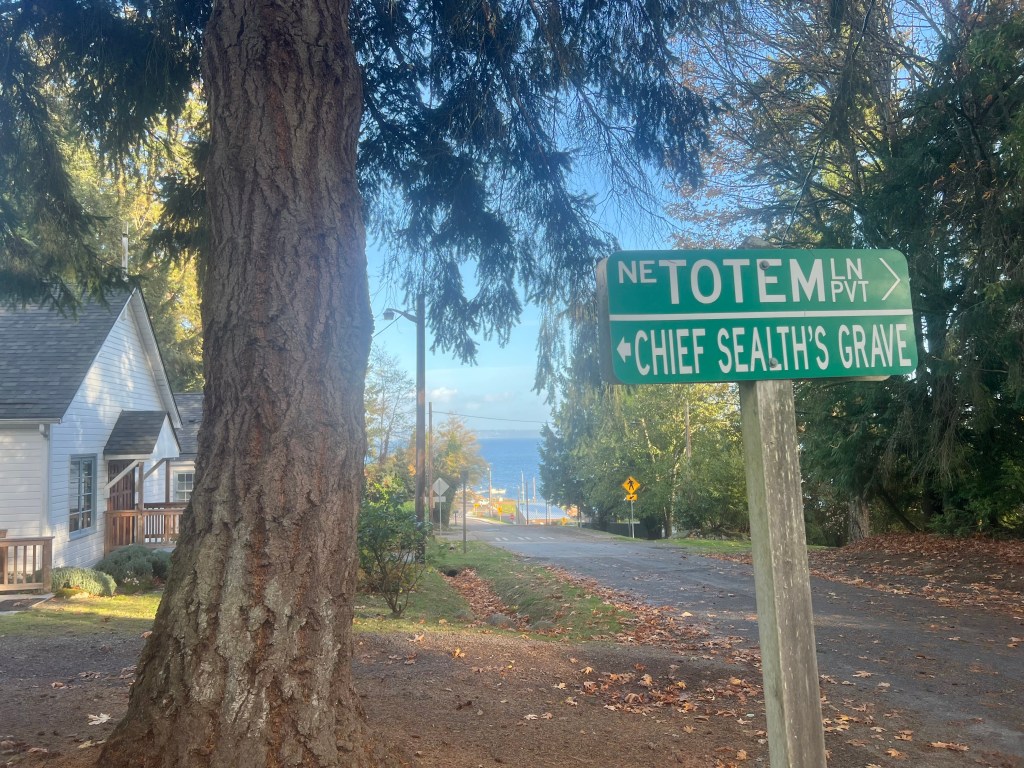
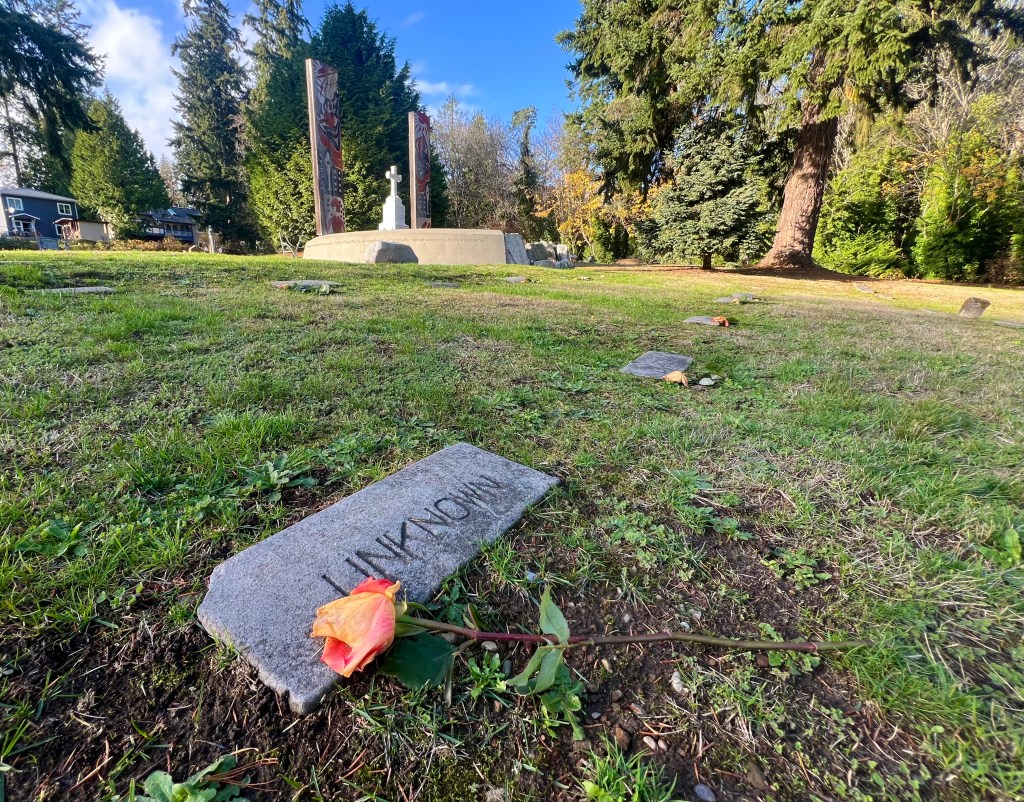
Child of a Duwamish woman and Suquamish man, six-year-old Seattle (sometimes transliterated as Sealth, though there is no ‘th’ sound in Salish languages) met Captain George Vancouver in 1792. The British Royal Navy officer who charted and pasted his name all over the Pacific Northwest rocked up to Suquamish land and bumped into the child who would go on to lend his name to the city of Seattle, WA.
As I approached the grave monument, not knowing much, I was shocked to see a white marble cross between two story poles. How disgusting, I thought, that they would erase Seattle’s identity like that with a symbol of colonization.
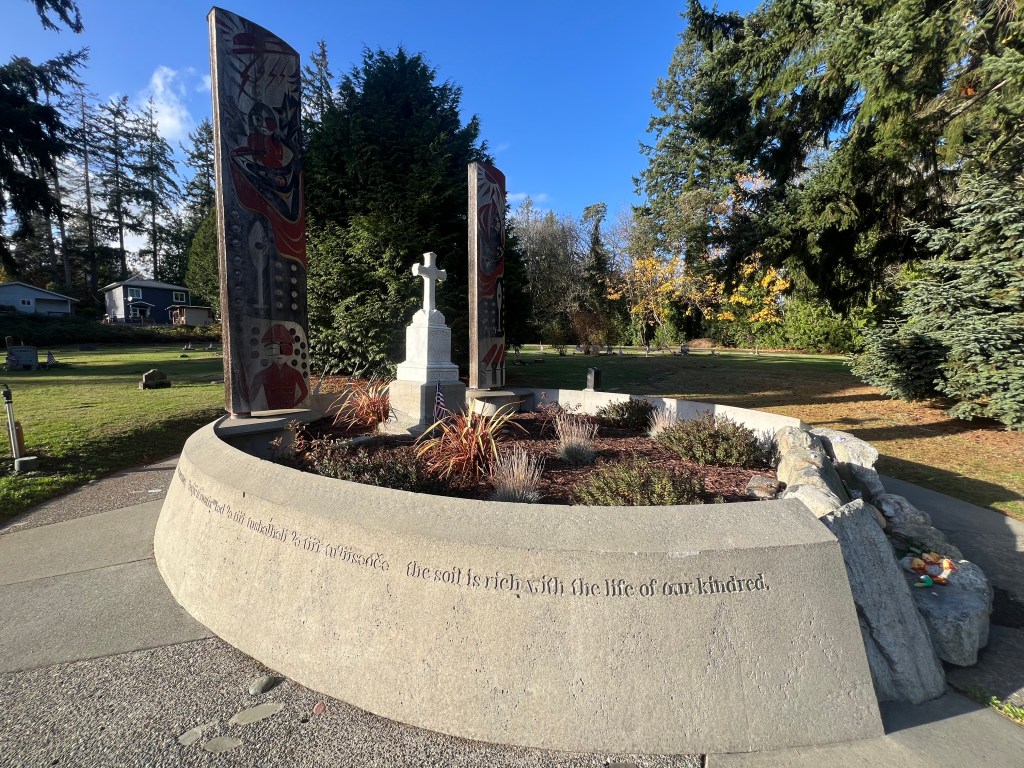
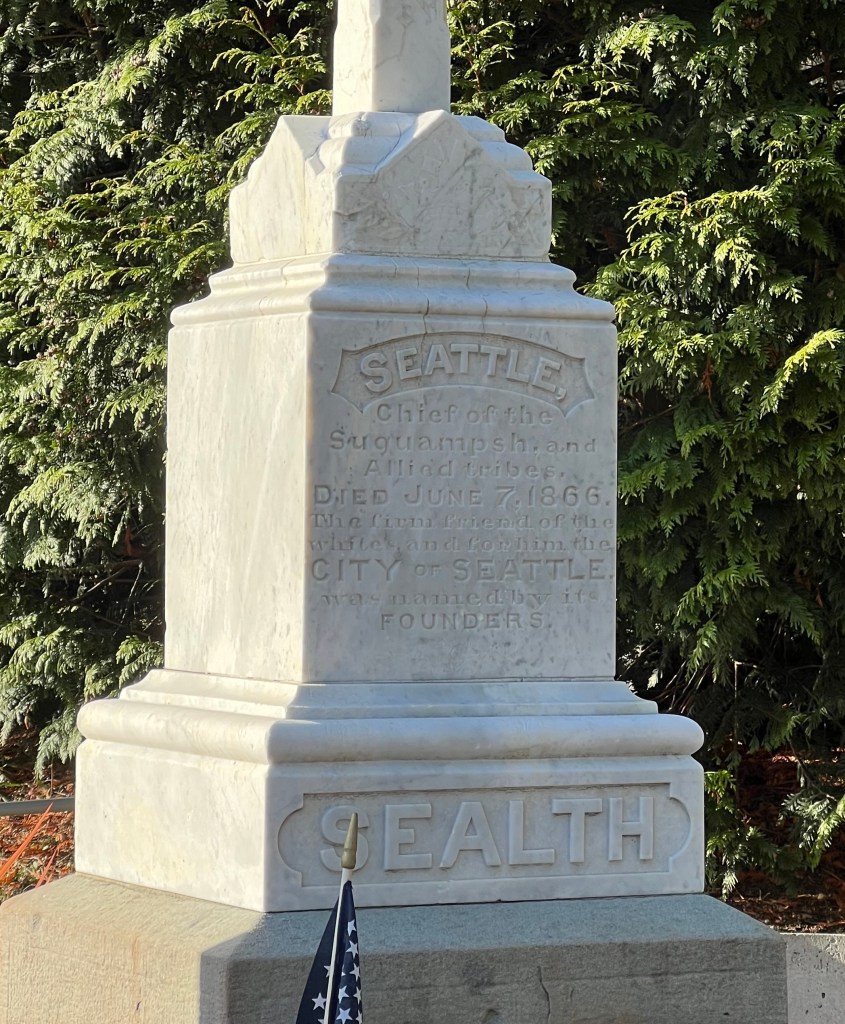
But as I read the inscription on the cross, I truly could not believe my eyes: “Seattle, Chief of the Suquampsh [sic] and Allied tribes, Died June 7, 1866. The firm friend of the whites, and for him the City of Seattle was named by its founders.”
Outraged and still ignorant, I started researching this man myself and was surprised to learn that he was indeed well-known as a ‘friend of the whites’, including signing treaties that his people did not agree with and famously converting to Christianity after the death of his son in a war he led against the nearby Chemakum, wiping out that entire population (the namesake of the town I currently live in, Chimacum!).
What really stuck with me, though, was that later in life Chief Seattle was forced to leave the city that bore his name due to the creation of “Town of Seattle Ordinance No. 5: An Ordinance for the Removal of Indians“, which expelled any Native persons who were not employed and housed by white settlers.
That you could spend 80 years being a friend of the whites, take their religion and technology, give them your name for their new city, and they would still kick you out…
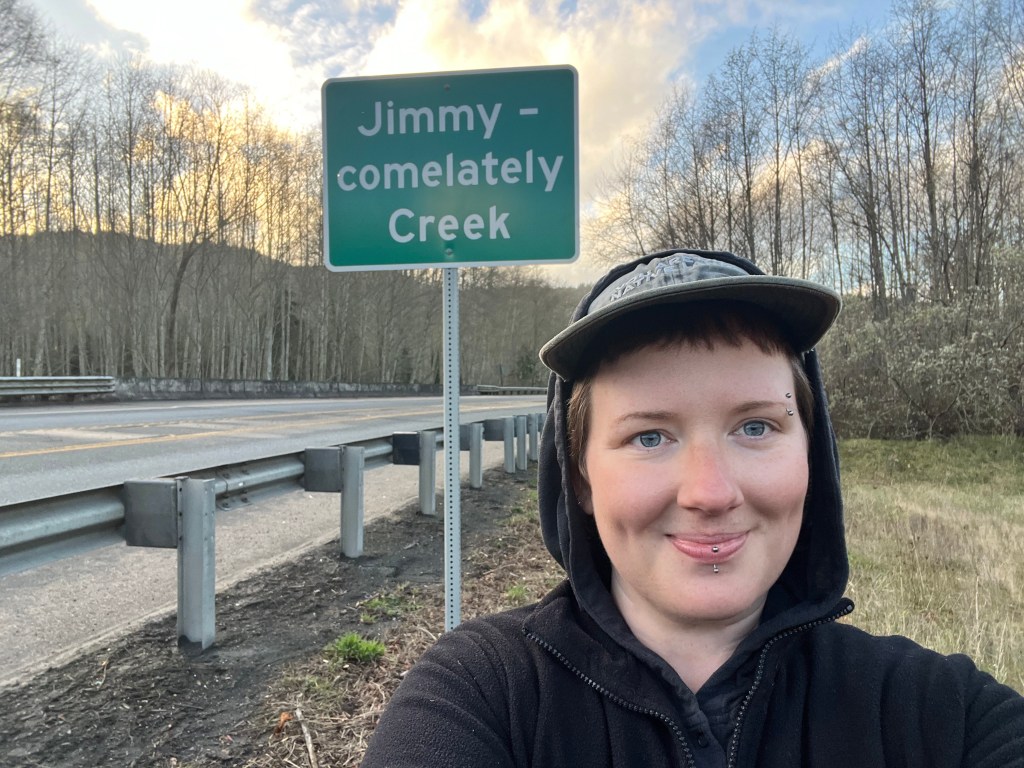
That you could be forced to buy back a tiny chunk of the vast land where your ancestors lived for tens of thousands of years from the Jimmycomelatelys who just rolled up, then wait another 100 years for them to formally acknowledge your existence and right to sovereignty there…
That you could serve in the US military, like many Native Americans today do, and then watch your army detonate a massive lead azide bomb in the American Heartland — only because it was expired before it could be sent to Gaza to slaughter another Indigenous population?
That you could somehow survive a 96% genocide since the arrival of Europeans and then be forced to endure a holiday where they celebrate how much they’ve been able to systematically take from you, year after year?


Leave a Reply